
Overseas Chinese
Returning to China for medical care
How to plan a specialist visit or procedure in China from abroad — timing, records, hospitals and costs.
What changes when the patient lives abroad and the hospital is in China — and which of those problems someone has to own.
Seven things that break, in the order they usually break
None of these are clinical problems. They are access problems, and they are the reason a coordinator exists.
- Language. Registration, payment and pharmacy are conducted in Chinese. Consent forms are rarely issued in English, and interpreters for languages other than English are scarce.
- The route through the hospital. Remote booking is often impossible from abroad; departments are spread across campuses; results come back on their own schedule.
- Payment. International cards fail at hospital terminals more often than not, large cash amounts are impractical, and overseas insurers cannot bill Chinese public hospitals directly.
- Visas and length of stay. The visa category and processing time are decided by the Chinese embassy or consulate, and a course of treatment can outlast the permitted stay.
- Follow-up after you leave. Once the patient is home, review appointments and record continuity fall apart across languages and time zones.
- Everything outside the hospital. Food, transport, accommodation and the sheer pressure of a foreign system.
- Choosing where to go at all. Which hospital, which department, and whether a second opinion is worth arranging first.
How booking actually works at the hospitals we hold
Our network page lists thirty international departments at twenty-nine hospitals across Beijing, Shanghai, Guangzhou and Chengdu, with the booking channel for each. Read that column and the problem states itself: almost every channel is a WeChat official account, a Chinese-language hospital app, or the 114 telephone line. Several release a fixed number of slots at a fixed time each day — 15:00 for day seven, 18:00 for day fourteen — and they are gone in minutes.
Those channels are not closed to you. They are simply built for someone standing in China with a Chinese phone number, a Chinese ID and the language. See the network and its booking channels.
The order things happen in
Assessment, then a written plan, then a deposit, then the balance. Four separate states. We do not compress them into one checkout, because a plan you have not read is not a plan you agreed to. How buying works.
What this guide will not tell you
Whether to have the treatment, which procedure is right, or what outcome to expect. Those are decisions for the treating physician. We coordinate access; we do not practise medicine. Medical disclaimer.
This guide covers process and paperwork. It is not medical advice and does not replace a consultation. Medical disclaimer
Sources: FamilyAid hospital network table and published service terms
Related services
Book the part you need.

Initial care coordination
A medical consultant, a specialist review and a draft plan — the first step before any travel.

Second opinion — written
A written opinion from a specialist at a Grade-A tertiary hospital, explained to you in plain English.

Single-visit medical escort
A bilingual escort at the patient's side for one hospital day, from registration to pharmacy.
More guides
Keep reading.
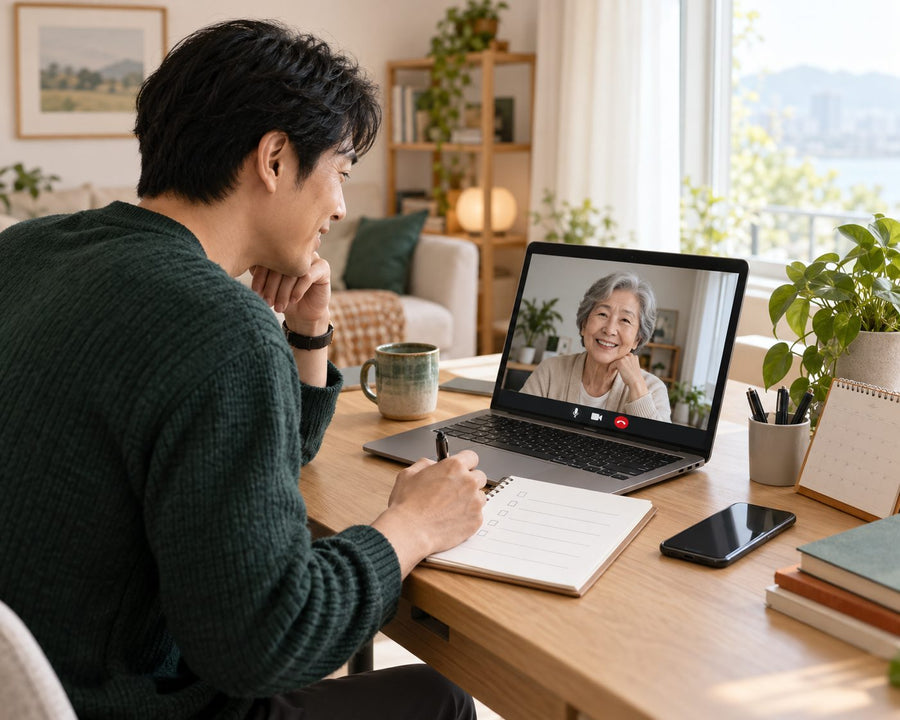
Arranging care for parents: a checklist
A step-by-step checklist for families organising a parent's appointment or hospital stay from overseas.
Read the guide
Coming to China for treatment
Visas, arrival, hospital stays and payment for international patients considering treatment in China.
Read the guide
Preparing for the first conversation
What to tell us in the first conversation — and what not to send through a website form.
Read the guideAbout your own situation
Ask a coordinator what applies to you.
This guide covers process and paperwork. It is not medical advice.